


FATA: Between Militancy and Statism

By Tahir Ahmad
Oct 1, 2014
![leading-parties-call-for-reforms-in-militancy-stricken-fata-1398264329-2166[1]](https://cpakgulf.org/wp-content/uploads/2014/10/leading-parties-call-for-reforms-in-militancy-stricken-fata-1398264329-21661.jpg)
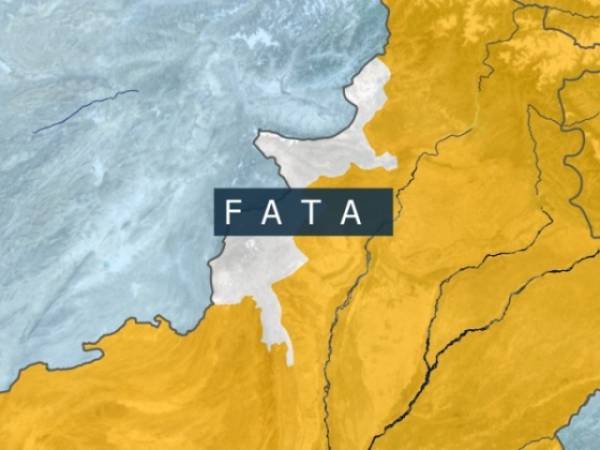
Operation Zarb-i-Azb launched in North Waziristan Agency of Federally Administered Tribal Areas (FATA) of Pakistan is considered the most important of all the campaigns launched in the Tribal Areas and some other parts of Khyber Pakhthunkhwa. The Inter-Services Public Relations (the media wing of the Armed Forces of Pakistan) press release issued on September 3, 2014, claims the Army’s successes in Zarb-i-Azb to the extent that 910 terrorists had so far been killed, and the Khajuri-Mirali-Miranshah-Dattakhel and Ghariom-Jhallar roads had been opened, as also major towns of Miranshah, Mirali, DattaKhel, Boya and Degan, had been cleared from the militants’ stronghold.
According to rough estimates, nearly 50,000 persons have been killed in the War on Terror and more than 55 million displaced, with four million repatriated to the Swat region after the Armed Forces took the region back from Talibans’ control, and one million are still in the camps of Bannu and surrounding areas. The war has already shattered the economy and social fabric of society; an arduous task for any government and political leadership to cope with in the coming days.
Unfortunately, the claims made in the Operations are tactical, while the question of Pasthun’s, especially the Tribals’, survivability is historic in nature and content. The word ‘Temporarily Dislocated People (TDPs)’ has been used in the press release. The approach using such terminology about the displacement of the inhabitants of these areas undermines the fact that they have a long history of exclusion.
The Frontier Crimes Regulations (FCR) imposed during the colonial era have led to the absence of a State system in the region. Subsequently, the failure of the State of Pakistan, Abubakar Siddiq says in his book, The Pashthun Question, to co-opt the inhabitants of tribal areas, together with other factors, has been responsible for the current crisis. In other words, it was the absence of statism that invited a spate of different currents of conflict between different forces to the region.
Therefore, the war between the Pakistan Army and militants should not be confused with the war between statism and militancy. The former has tactical military objectives; the latter is concerned with the power structure and political orientation of society. In all conflicts of the region, the war objectives of the sponsoring states; the colonial British, the Soviet Army, the United States and its allies; allied for the containment of socialism and now the conflict between the regional and world powers is strategic in nature.
They ignore the historical process that has been shaping the region’s power and organizational structure. It is the fourth phase of the historical conflicts that has been occurring since the Colonial age between the established character and identity of Pashthuns, and the current of colonialism. In the first phase, society encountered colonialism through nationalism and tribalism together with religion and customs of Pashthuns.
Among the notables nationalists were Khan Abdul Ghafar Khan and Faqir of Epi who fought in the name of nationalism and tribalism with non-violent and violent discourses, respectively. In some places, it was more religious in nature, as it was declared a war between the followers of Islam and the infidels which lasted till independence. The colonial power could not achieve victory.
Rather, for restoration of peace and security, order was imposed through the Frontier Crime Regulations, which continue to operate in the region till today. Amir Abdur Rahman, the then Afghan King, after the Durand Line agreement was signed had warned the British that the inclusion of these areas into colonial empire would bring instability and the people of these areas would be fighting against them. His words fell on their deaf ears and the British Empire did what they could.
In the following years, the area witnessed violence against the colonial rule which the latter failed to establish peace. Consequently, the tribal society remained deprived of the experience of statism and modern political institutions. Tribalism under the rubric of FCR was accepted as the sole regulating structure of society.
The second phase was characterized by a war between the currents of socialism and tribalism. The emergence of Socialism in Afghanistan, the trans-border population along the Durand Line faced the onslaught of Socialism on their religion and customs. Under State patronage, the United States, Saudi Arabia and Pakistan, along with Islamists who came from all over the Muslim world, fought to contain Socialism.
The defeat of Socialists and the settlement of Jihadists in the tribal areas militarized society socially and religiously. In the subsequent years, tribalism was weakened and Islamic militancy took roots. After the defeat of Taliban in Afghanistan and their concentration in the Tribal Areas, the focus of the War on Terror was shifted to the Tribal Areas of Pakistan and the bordering region.
The third phase is characterized by the encounter of tribalism with militancy. Militants gained support on Islamic appeal from the locals, and those who were opposed to militants, were treated brutally. By terrorizing and killing the tribal leadership, a vacuum of power was created in society.
Every Agency of the Tribal Areas was controlled by its respective Taliban leader. The Jirga (the customary council for settlement of disputes) remained absent, while the FCR were ineffective. Society was left in a state of anarchy at the cost of thousands of people killed and millions displaced.
After the spillover of militancy into the settled districts of Khyber Pakhthunkhwa, the conflict between statism and militancy started. Military operations against militants in Buner, Swat, Dir, Malakand, Mohamand, Khybar, Kurram and South Waziristan were successful in routing out the terrorists from the region. While the current Operation Zarb-i-Azb in North Waziristan is in progress, one million displaced persons residing in camps are waiting for their safe return, the military claims success every now and then, but the battle against militants is not yet over. According to a BBC news a few days ago, pamphlets were distributed in the Afghan regions adjoining the Tribal Areas to get support for the ISIS. Hezb-i-Islami was alleged to have aligned itself with ISIS, but media reports deny this by quoting Hizb-i-Islami leader Gulbaddin Hikmathyar. Moreover, the porous nature of the border and the inability of Afghan security forces to seal the border may provide exit sanctuaries in Afghan regions contiguous to Tribal Areas. That would pose a challenge to the tactical victories of Pakistan Army in the shape of trans-border incursions, frequently occurring in Dir these days.
Moreover, the U.S. Secretary of State, John Kerry, in his article published on August 29, 2014, in the New York Times states, “The United States will hold the presidency of the United Nations Security Council in September, and we will use that opportunity to continue to build a broad coalition and highlight the danger posed by foreign terrorist fighters, including those who have joined ISIS. During the General Assembly session, President Obama will lead a summit meeting of the Security Council to put forward a plan to deal with this collective threat.”
If any decision is taken at UN against any of the organizations having links with the regional militant organizations, Pakistan will be pressurized for doing more. It is high time to tackle on militancy militarily and replace it with statism in the Tribal Areas.
Statism does not come through establishment of check-post and cantonments, but by administering the power structure of society through State institutions. The political and legal alienation needs to be put to end by introducing the judicial and political system. The generation of economic activity is another aspect which will encourage the inclusion of the tribals into the mainstream of the State.
Those who think that the people of these areas are separatists are still living in the 1970s. The age of separatist politics in Pashthun political ranks has ended which is evident from the fact that both the hard-core nationalist parties; Awami National Party and Pakhthunkhwa Mili Awami Party; are co-opting with the centre in the national parliament through constitutionalism. It is a critical phase of the history of the people of FATA to be accommodated in the mainstream of Pakistani society. But, unfortunately, the military operation is in progress, the political parties across the country display lack of interest to envisage a comprehensive strategy for the inclusion of tribals. If the region is left in a vacuum under in the clutches of the FCR, another phase of violence with new dynamics would start. History repeats itself and those who do not learn from their history are doomed to failure.
Tahir Ahmad is currently working as a Research Associate at the Centre for Pakistan and Gulf Studies (CPGS). The views expressed in this article are of writers own and do not necessarily present the position of the Centre.